We went to Chongqing back in May, and ever since, so many of you have been asking me to write about it. Sorry for the wait. Here it finally is.
Delhi people think they have seen crowds. Chandni Chowk before Diwali, anyone? Then you go to Chongqing, and Chongqing looks at all of that and says, "Cute." This is the China city everyone's feed is full of right now: towers stacked on hills, a monorail that runs straight through a residential building, and a cliffside of lit-up wooden balconies that looks unreal at night. We walked till our feet filed a complaint, shopped far more than we had planned, and I nearly fainted in an underground bunker. Here is how it actually went.
Getting There, and a Not-So-Great First Impression
We came to Chongqing after Shanghai (here is our Fairmont Peace Hotel review). Chongqing sits far inland, so we flew China Eastern from Shanghai Hongqiao, about 2 hours 45 minutes. Economy for the three of us came to about ₹24,798.
✈️ Book domestic China flights on Trip.com
Don't search for these flights on Indian booking portals, you will be in for a shock: we saw fares 3 to 4 times higher for the exact same flights. Always search on Trip.com for flights within China.
I'll be honest, though. Chongqing did not impress me at first. On the cab ride from the airport, I did not like the vibe at all. Brown mountains, everything a bit dull, like a lower-end Mussoorie. I sat there thinking, "Yeh kya hai? This is the city the whole internet is obsessed with?" Then we reached the Westin, and things started looking up.
Where We Stayed: The Westin Chongqing Liberation Square
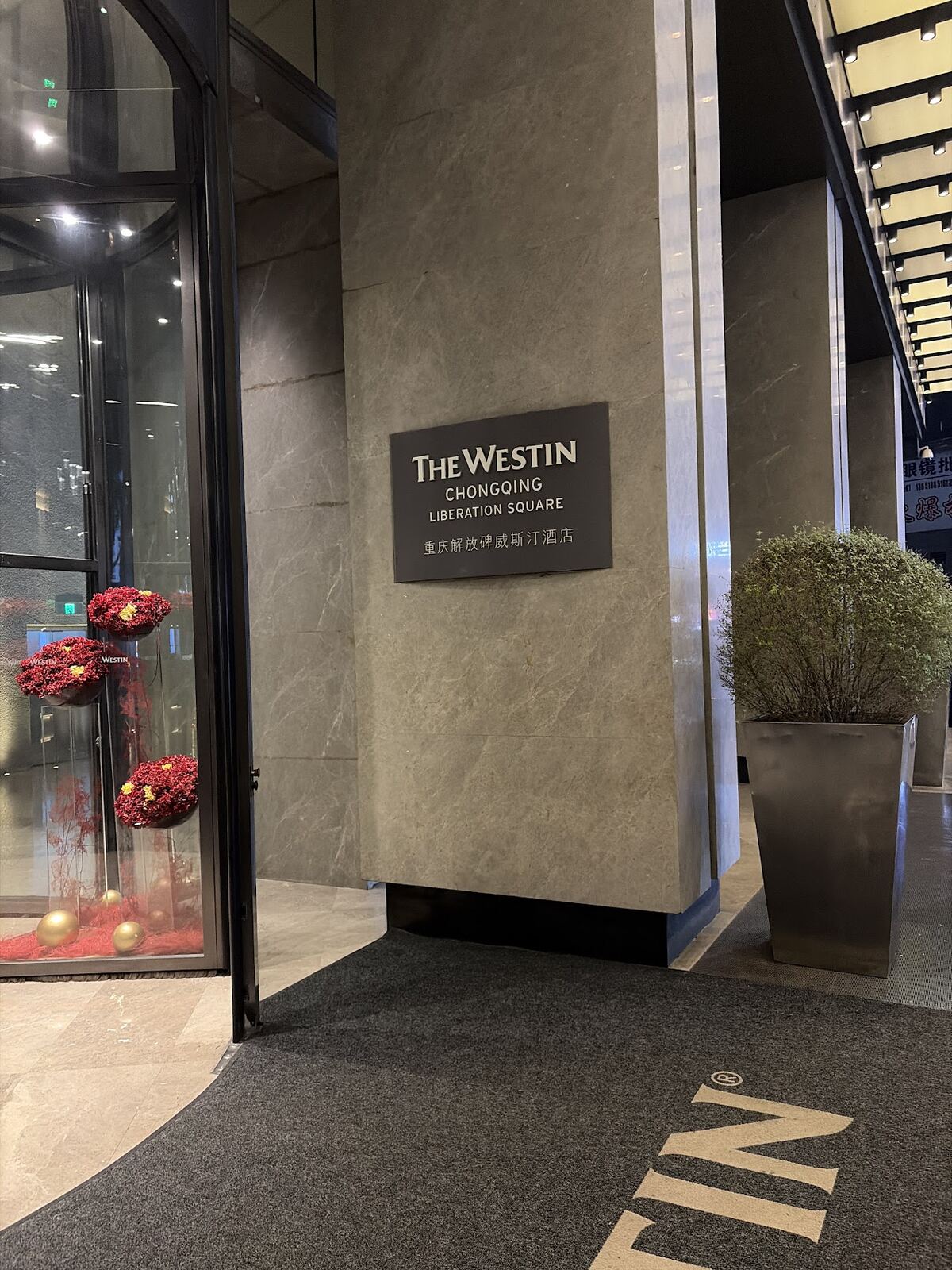
The location is perfect. Jiefangbei's centre is a seven or eight minute walk away, so for most of the trip we didn't need a taxi at all. Paisa bhi bacha, and we got our steps in. The rooms are spacious with lots of light, the hospitality was lovely throughout, and the lounge access became our base camp between outings.
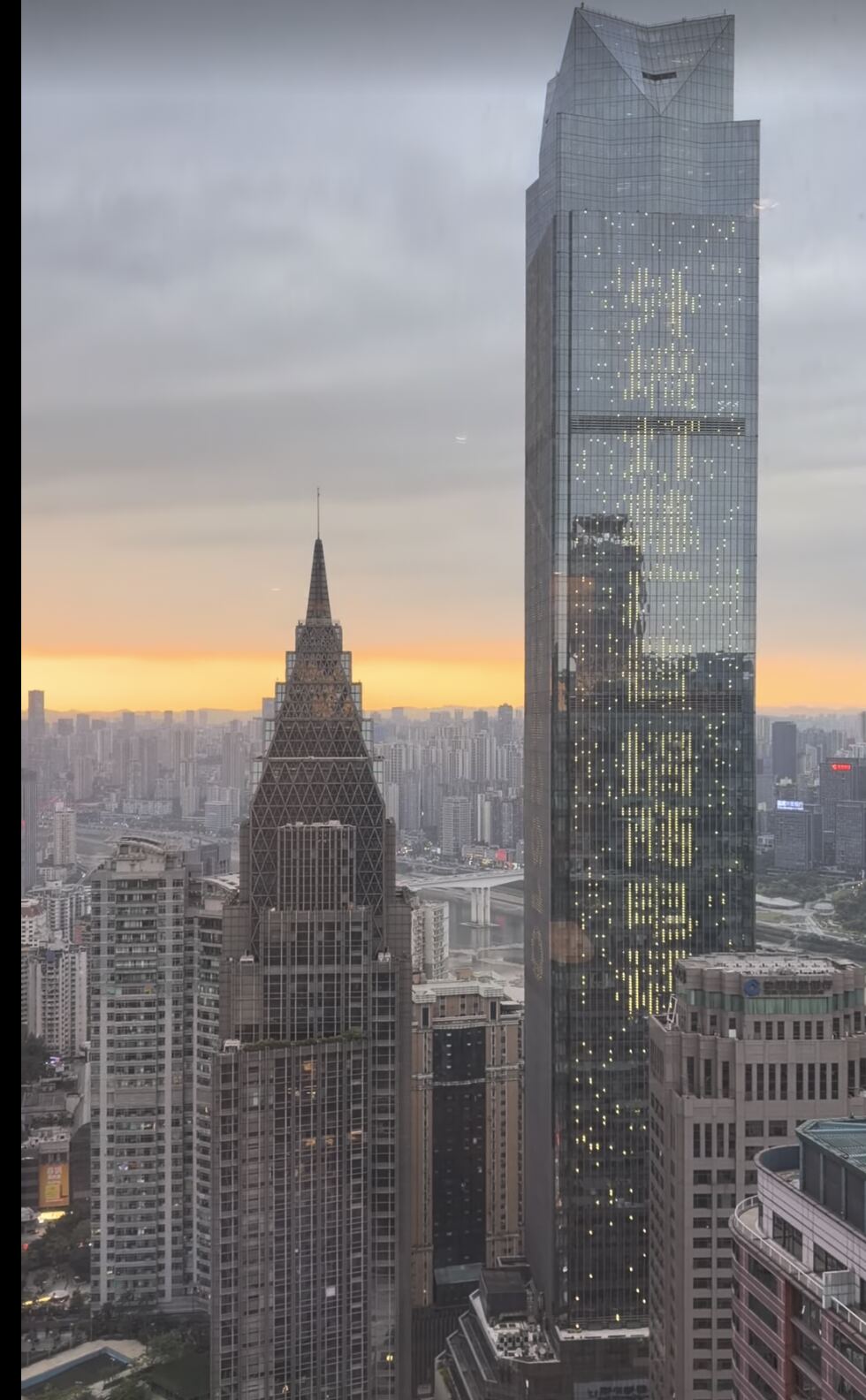
We booked an Executive Deluxe King for three nights, 12 to 15 May, for the two of us and our daughter. The Executive room includes lounge access, breakfast buffet, WiFi and self parking. The whole stay came to ₹61,721 all in (₹48,407 plus ₹13,314 in taxes), roughly ₹20,600 a night.
Day One: The Lights Come On, and Hongya Cave
Then evening came, we walked out into Jiefangbei, and everything changed. There were hotpot places everywhere, and the air had this peculiar smell of chilli. Every time I stepped out of the hotel, I could smell it, like the whole city was cooking. Once the lights came on, the dull city from the cab ride had simply disappeared.
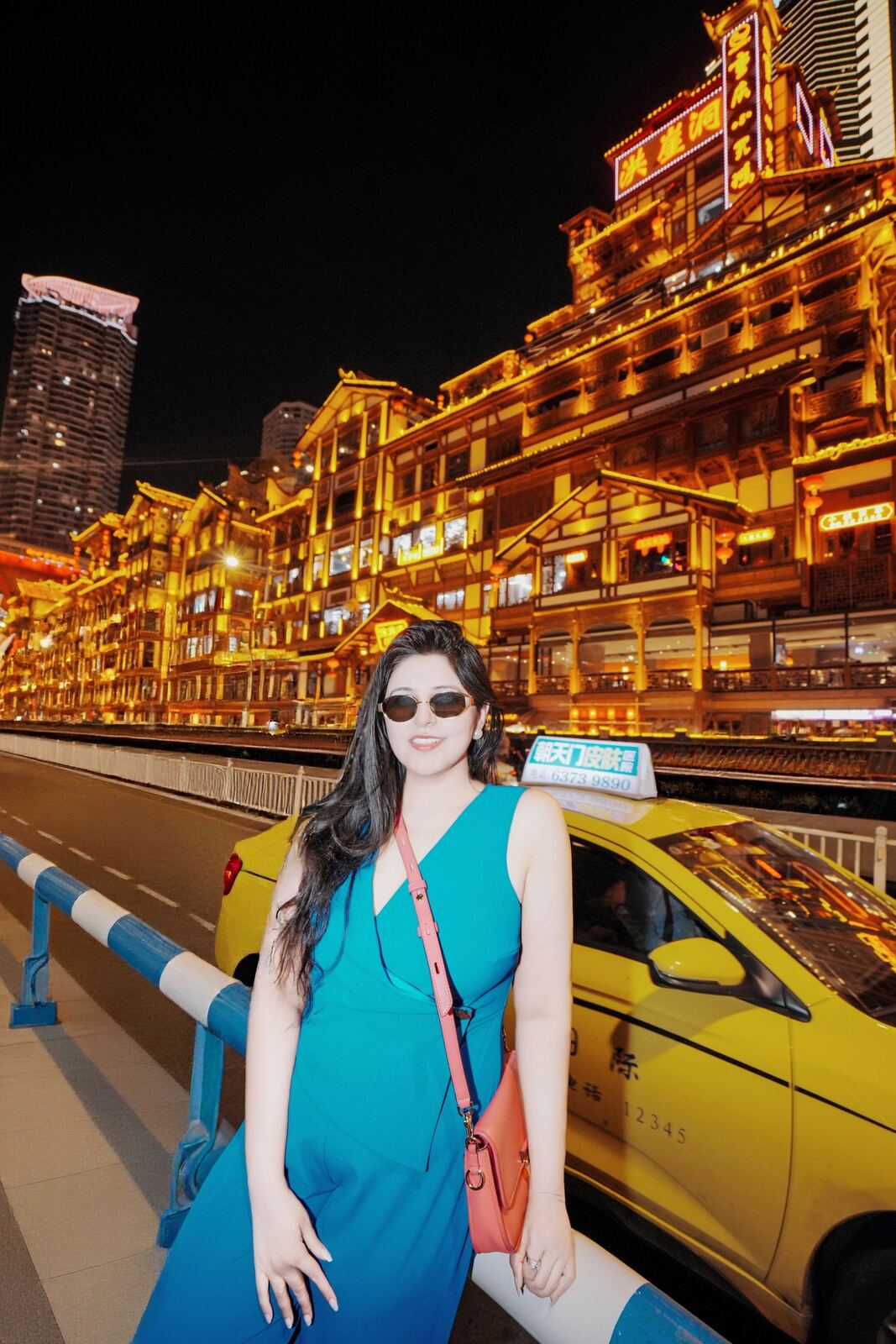
That first evening we did what every first-timer does and walked from the Westin to Hongya Cave. We reached, looked around, and thought, "Okay, done, we've arrived." We had not arrived. Hongya Cave is built down the side of a cliff, and to get to the bottom we had to go eleven floors down. The lifts were packed, so we took the stairs. Eleven floors. Neeche. On foot.
And the crowd! The only place in India that might compete is Varanasi, and Chongqing gave it serious competition. We had never seen anything like it.
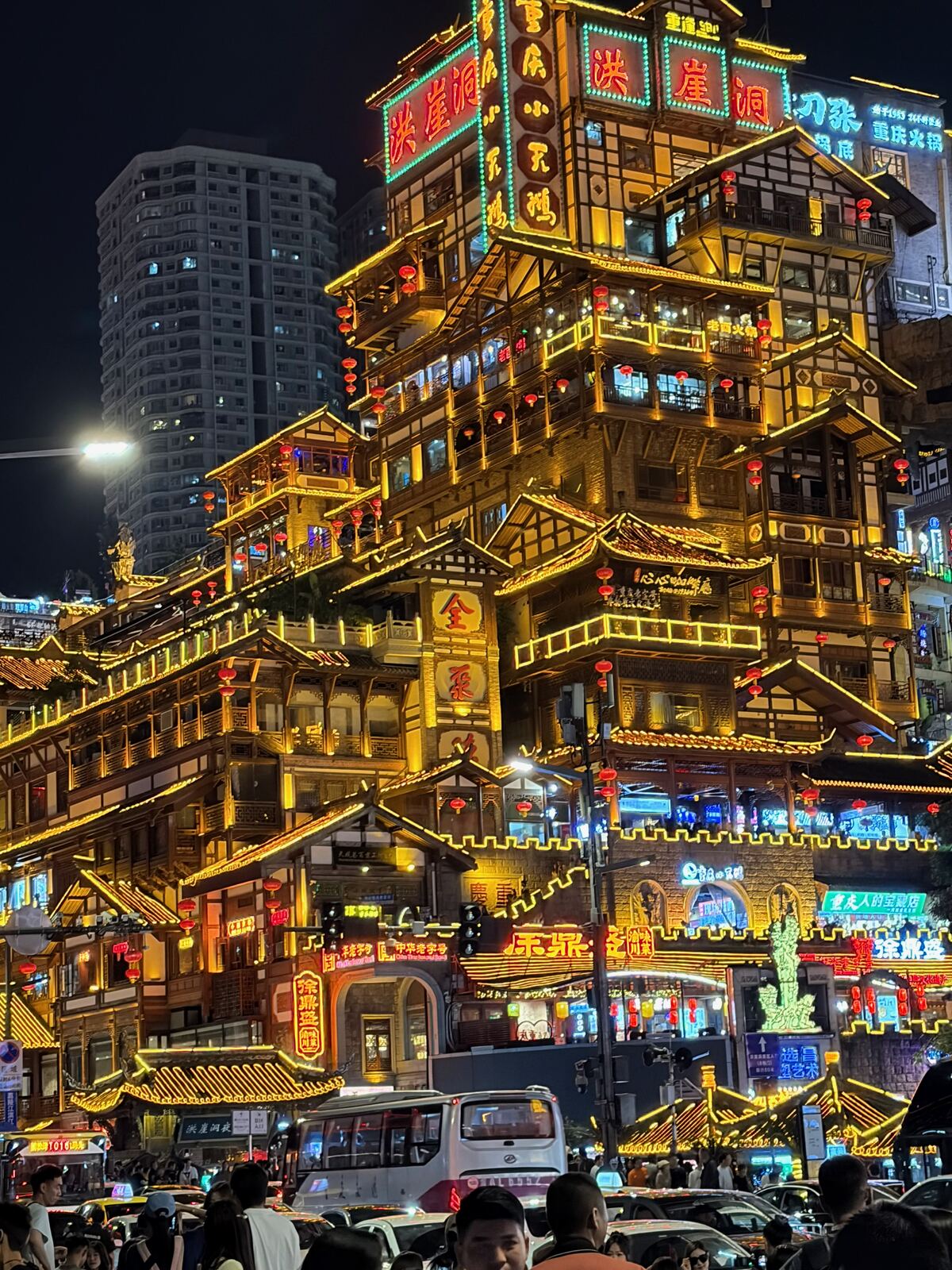
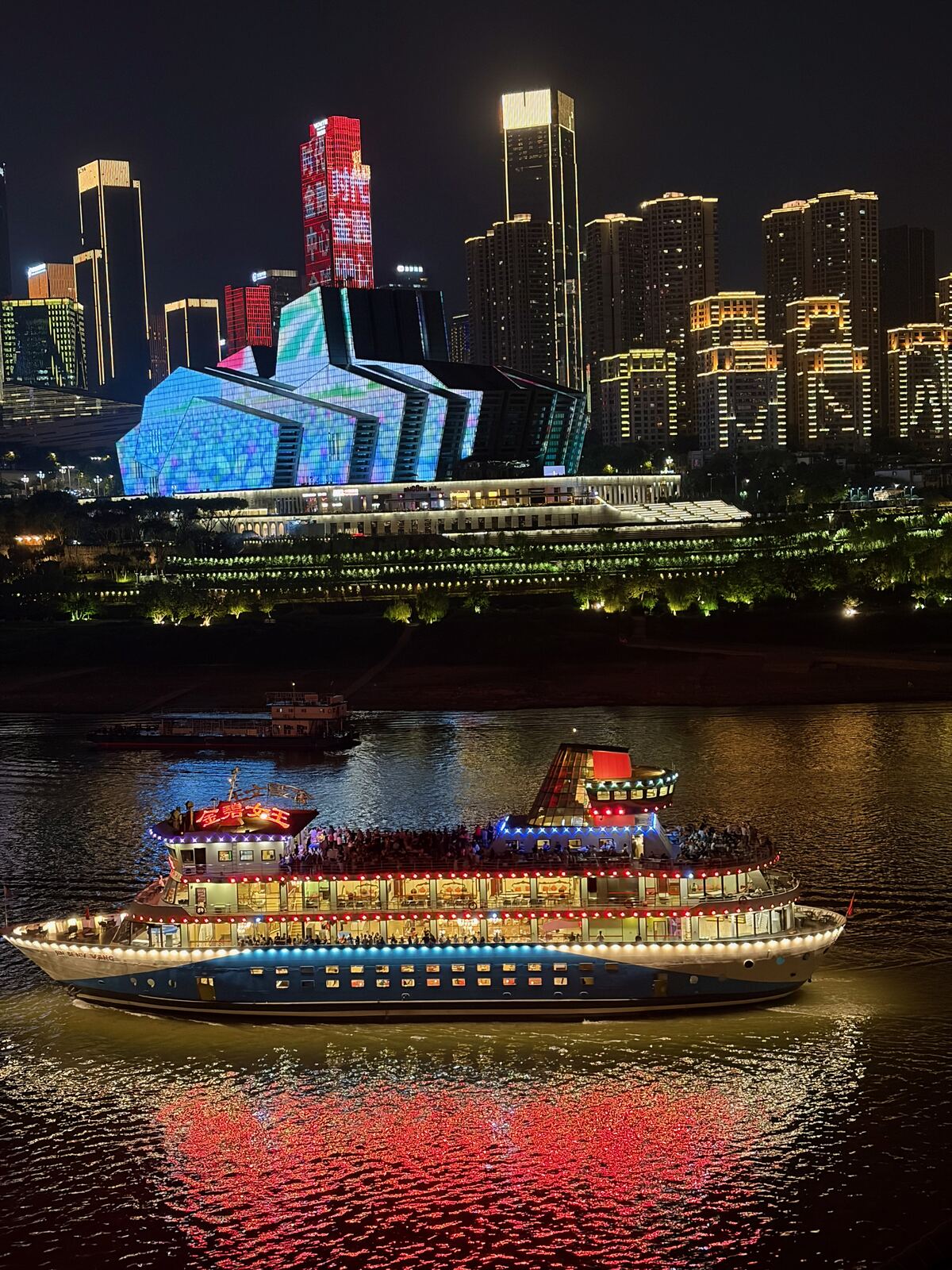
Down by the river, cruise boats light up the water at night. We didn't take one. As avid travellers we've done so many cruises that we spend our time on other things now. Watching them float past that skyline from the riverside costs nothing, and the view is just as good.
Day Two: Liziba, Where the Train Eats the Building
The next morning started at Liziba station, and it was so much fun. Like every other tourist there, we took far too many pictures. Photographers wait around, patient and nice, at hardly 20 yuan a picture. They will even shoot those videos where it looks like you are eating the train. Yes, really. Chongqing's most famous snack is apparently the metro.
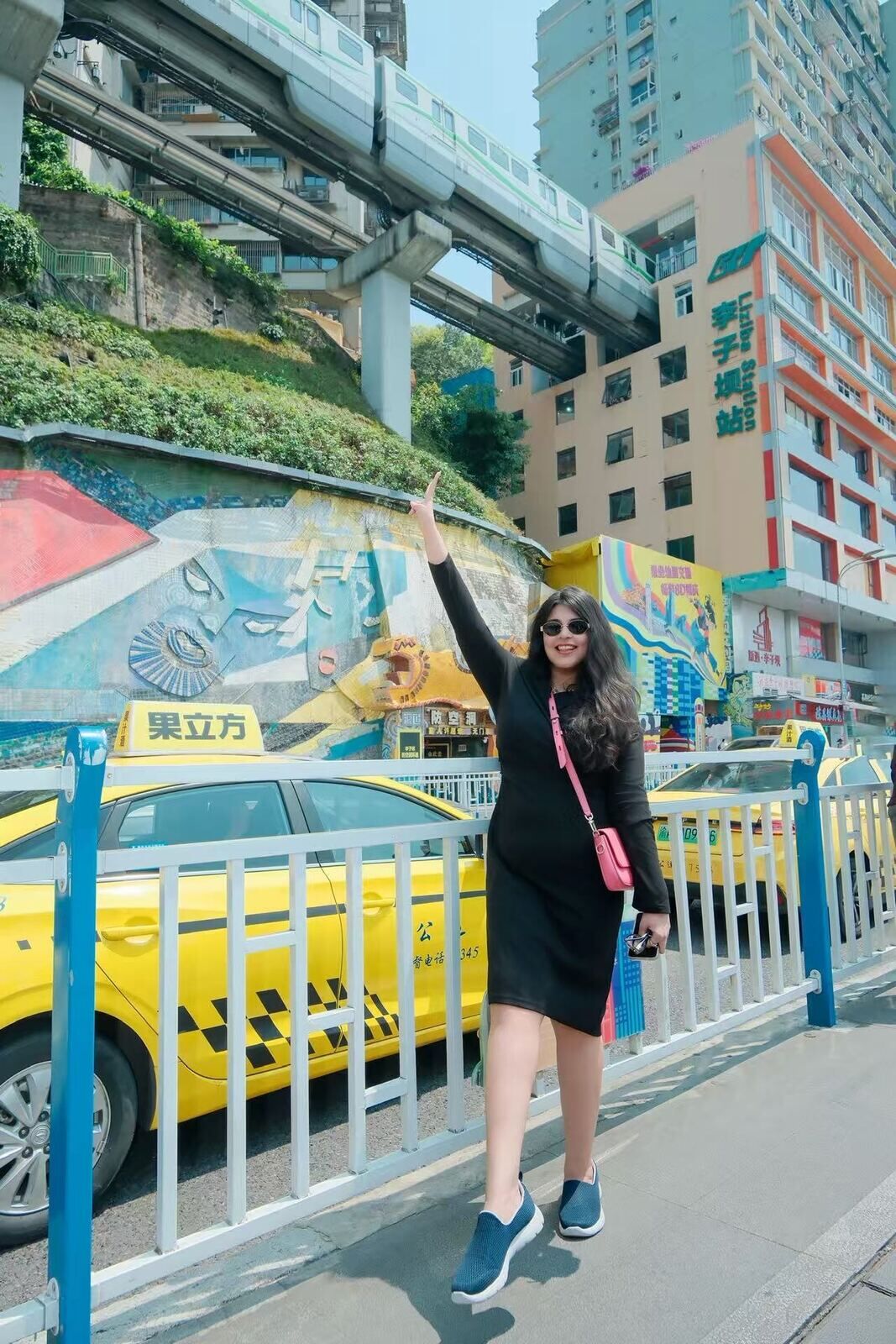
Even the cops around the station were super helpful. It was a hot day, but there are ice creams right there for very little, so no complaints. Just across the road there is a small shopping centre for souvenirs.
The 22nd Floor That Is Also the 1st Floor
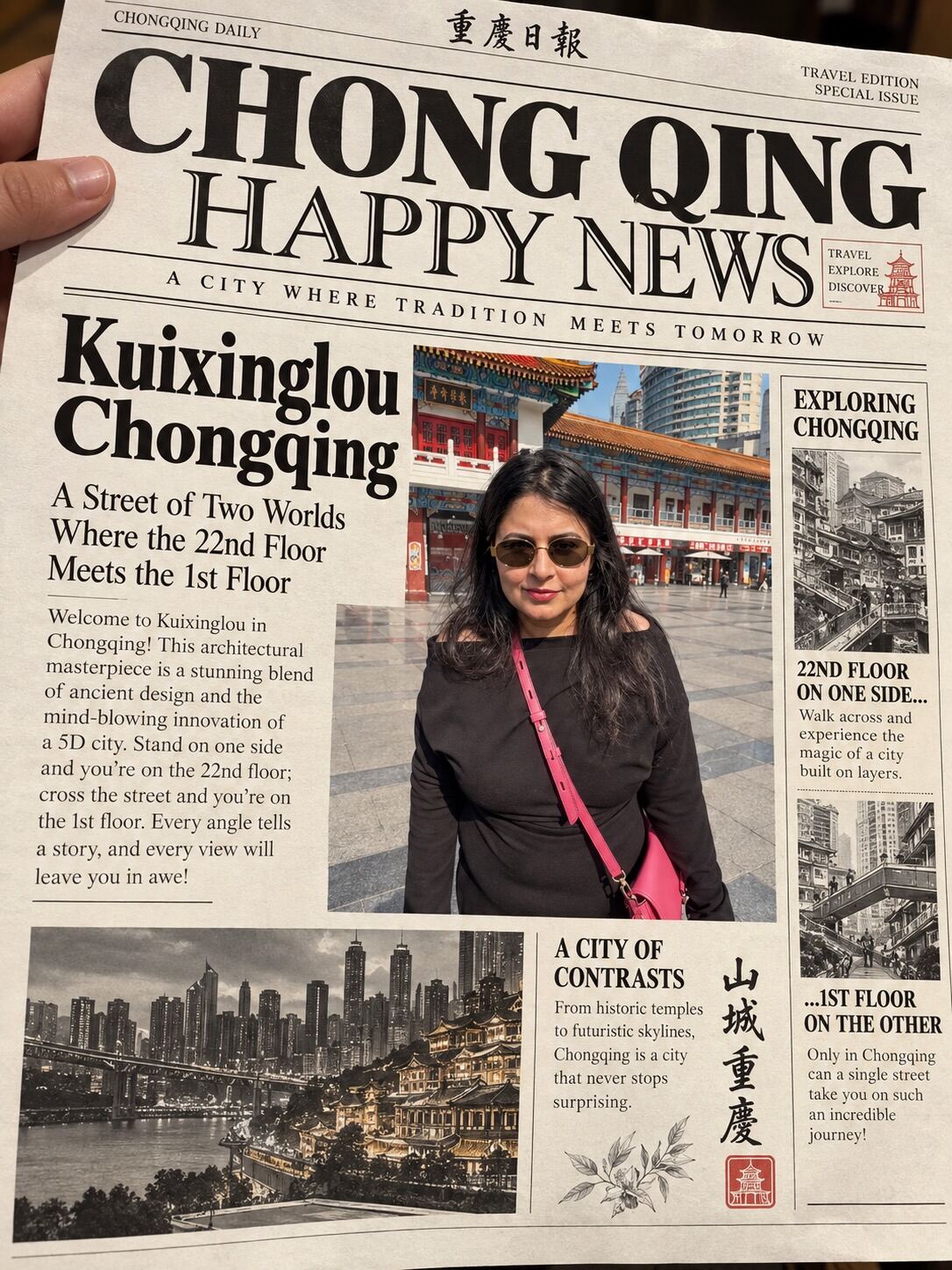
From Liziba we took a taxi to Kuixinglou, the building everyone calls an architectural marvel. On one side you are standing on the 22nd floor. Walk out the other side and you are on the ground floor. Same building. Same you. Different floor. We knew Chongqing is built on hills, but this was the first time we had seen anything like it. Now I understand why people call it the 8D city. My brain is still recalculating.
Here is a souvenir I actually want to keep: a photo machine that takes your picture and prints it on the front page of a novelty Chongqing newspaper for a few bucks. At last, front-page news for standing around looking confused.
Wandering Jiefangbei, and the Silent Scooter Attack
From there we just walked, which is the best part of Jiefangbei. You keep walking and there is always something more to explore. It was our first time in China and the culture felt so different from anything we had seen.
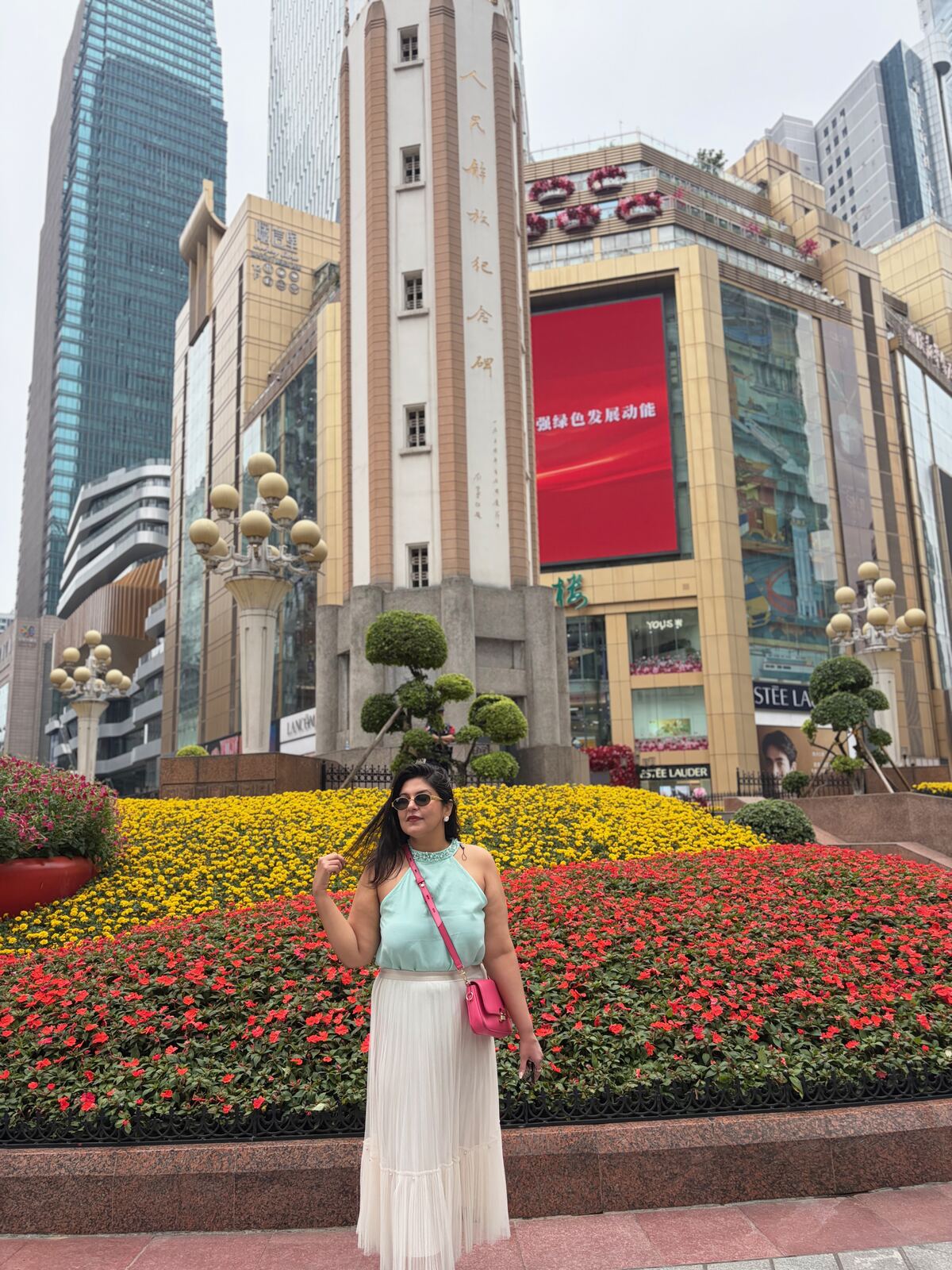
One thing we found really funny: almost every bike and scooter here is electric. They make no noise at all, and for some reason they love the footpaths. So you are strolling along, minding your own business, and suddenly a scooter is right behind you. No horn, no engine, nothing. Coming from Delhi, where every vehicle announces itself from two streets away, this was a whole new kind of danger.
Hotpot in a WWII Bunker, Served by Robots
You cannot come to Chongqing and skip hotpot. That would be like going to Amritsar and skipping kulche. And the place we picked was not an ordinary restaurant. Underground City Old Hotpot (地下之城老火锅) is inside old air-raid shelters, dug during World War II when Japanese planes were bombing the city. We went to the Longtousi branch in Yubei District.
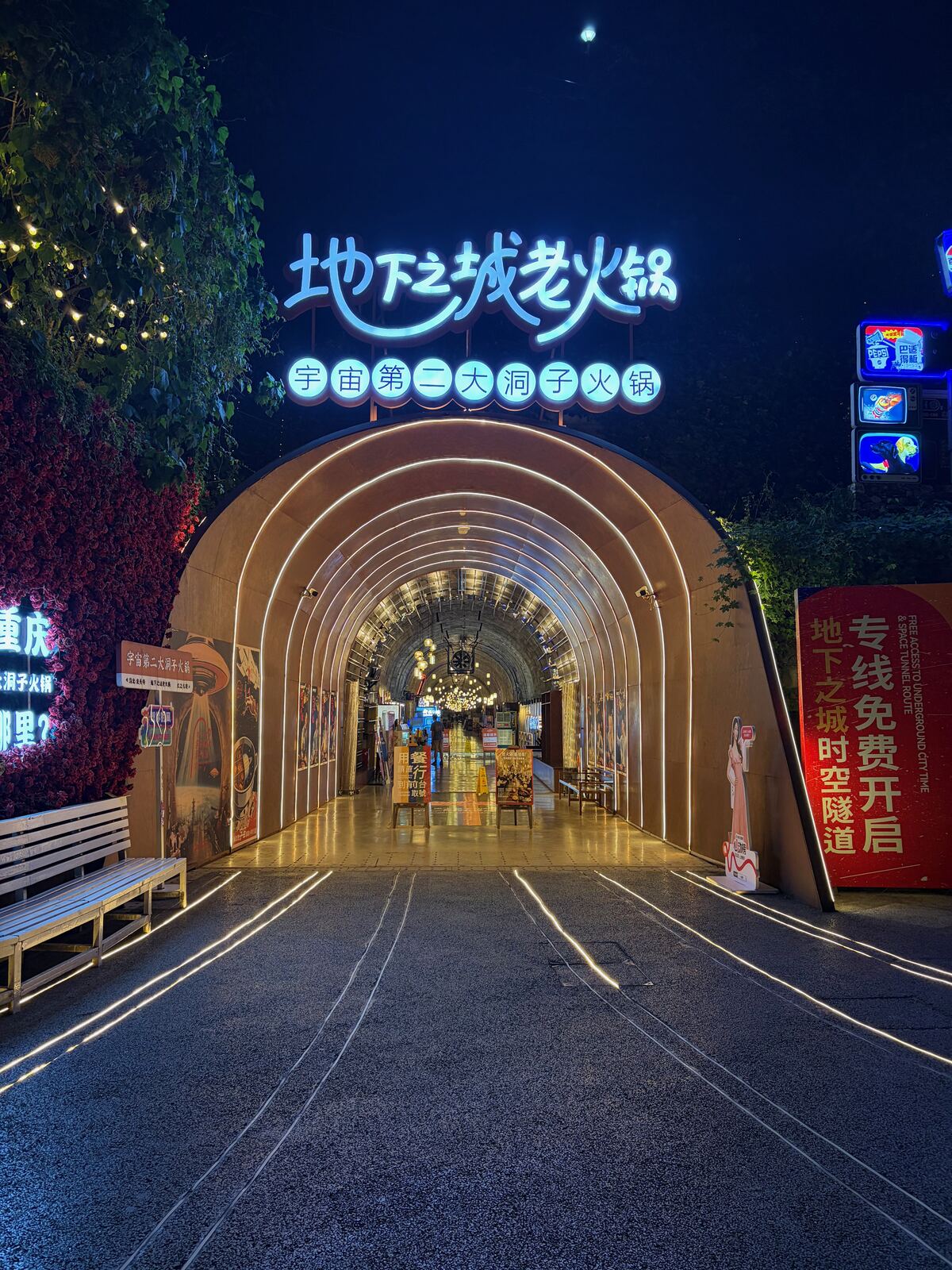
It's not walking distance from Jiefangbei, so we took a DiDi: 11.90 yuan from the Westin, 18.40 yuan back that night. Under 20 yuan each way across the city. Delhi autowallahs, please take notes.
You cook your own food at the table, somewhere between hotpot and barbecue. And the food doesn't come with a waiter. It comes on little robots that roll up to your table and serve you. Very futuristic, very Chongqing.
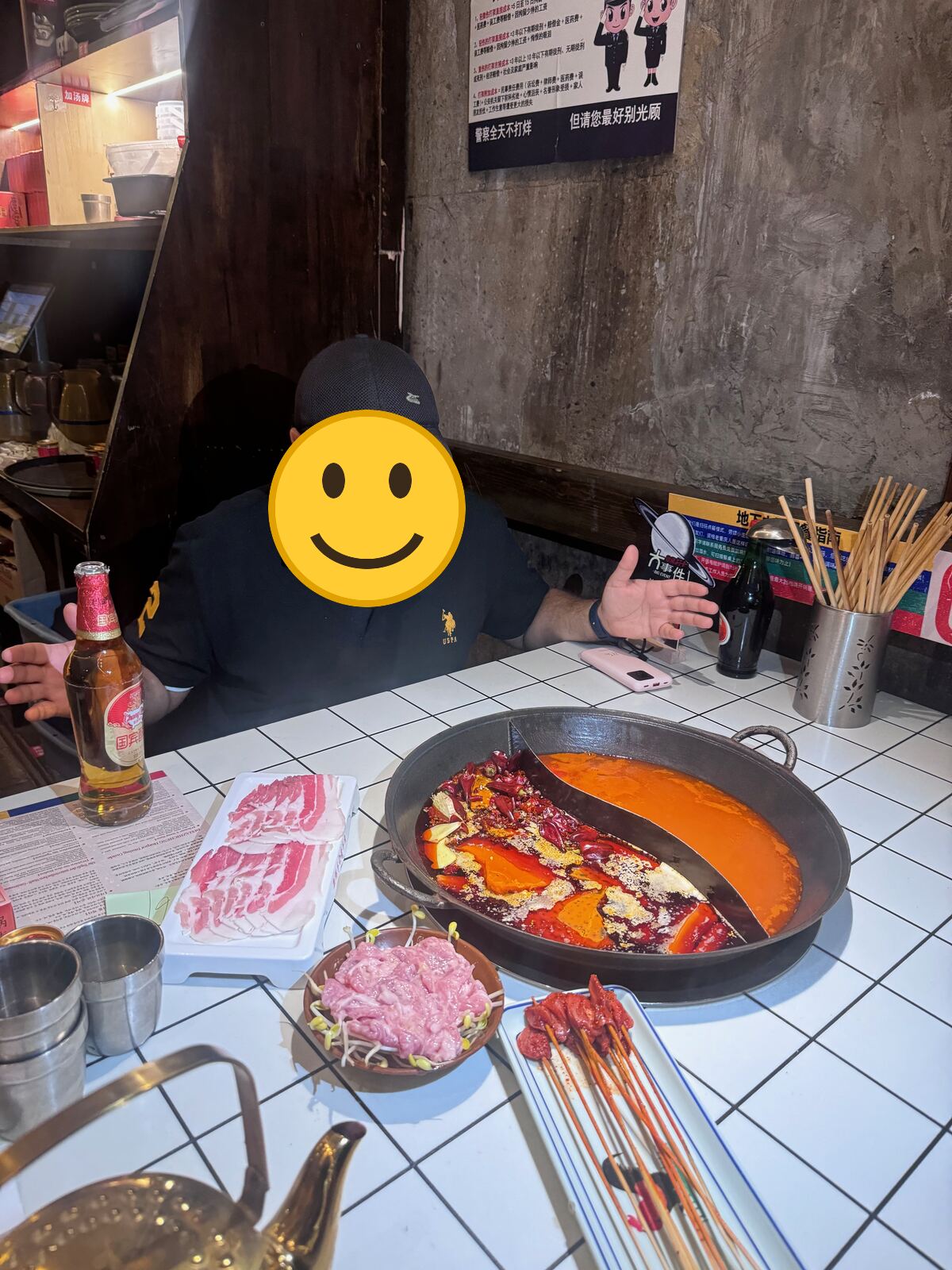
🌶️ Tip for families: ask for the split pot
Ours came divided down the middle, one half a fiery red lake of dried chillies, the other a milder orange broth. It's how a family with very different spice levels survives Chongqing hotpot without anyone crying. Well, crying less.
A warning about the red side. My husband is from Hyderabad and handles serious spice. Chongqing's red broth still had him crying for a full hour after dinner. Not a few tears, a whole hour. So if a Hyderabadi palate can't take it, start with the mild side and work your way up. 😂
Now, the fainting. It wasn't the heat and it wasn't the spice. It was the menu. Fresh duck blood, 8 yuan. Blood tofu. Bullfrog. Something called "Premium Bullwhip Flower", which I refused to look up until we were safely back in India. Then the robots rolled up with trays of raw, uncooked everything and parked it right in front of me, and I realised that here, dinner arrives uncooked and you are the chef. I nearly fainted. My husband, meanwhile, was ticking boxes like a topper who had studied for this exam, and happily dunked everything that came his way. Husband of the year for bravery, not for solidarity.
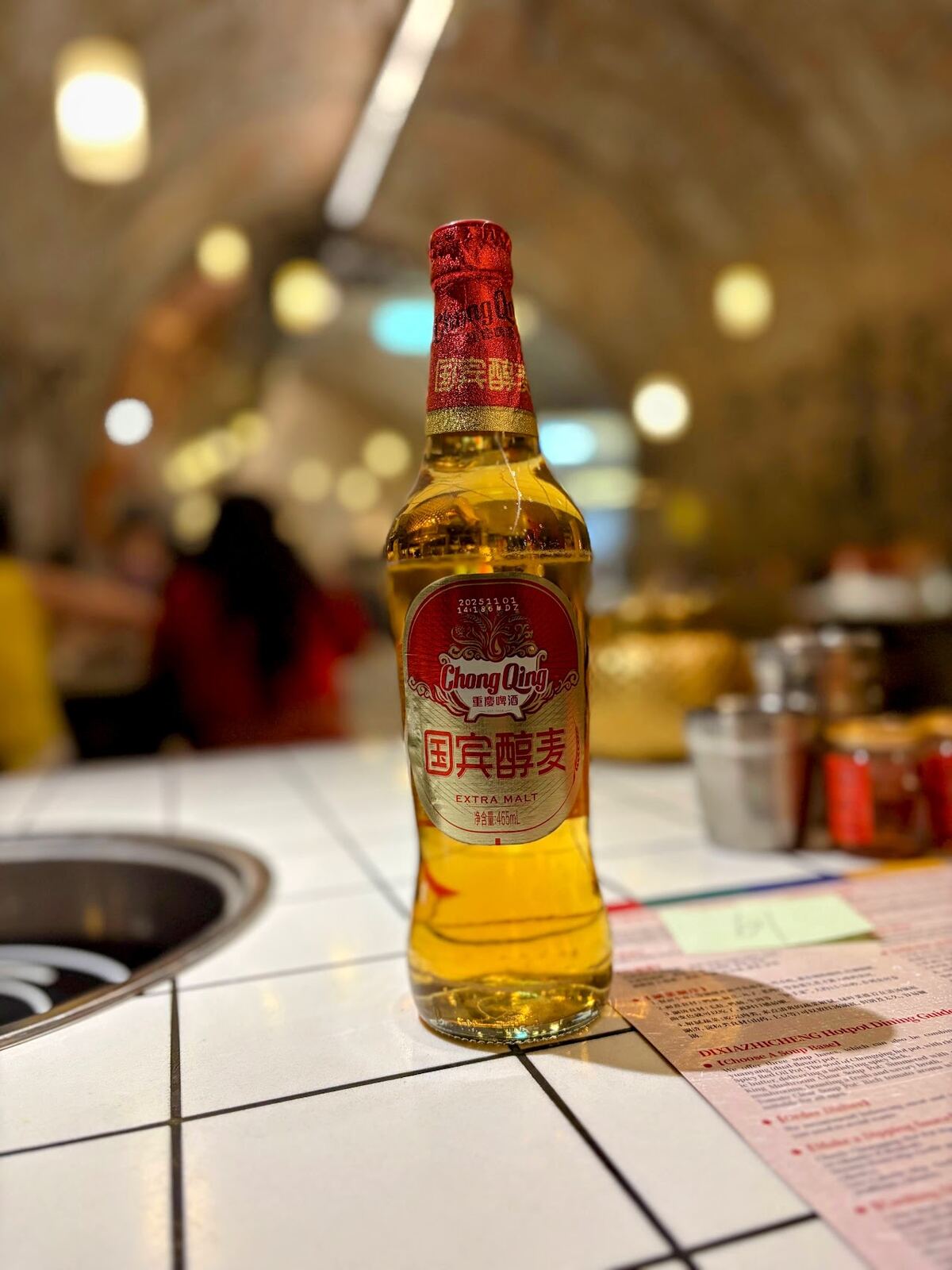
Ordering works on a paper tick sheet: a little box next to every dish, tick what you want, hand it over. Most plates sit between 8 and 38 yuan, the sliced pork loin is 28, the dipping-oil dish is 6 yuan a person, and a local beer is just 8 yuan.
Vegetarians, don't panic like I did. The tick sheet also has tofu (Dianjiang frozen black tofu and Xiushan rice tofu at 8 yuan each), Jinfo Mountain bamboo shoots, Wulong sweet potato noodles, braised taro and braised potatoes.
Great fun, great experience, and a story I will be telling at every family dinner for the next ten years.
Day Three: We Skipped the Show and Went Shopping
The plan for the next day was the famous Chongqing 1949 show. The plan did not survive contact with the malls. We chose shopping, and I regret nothing. Almost nothing.
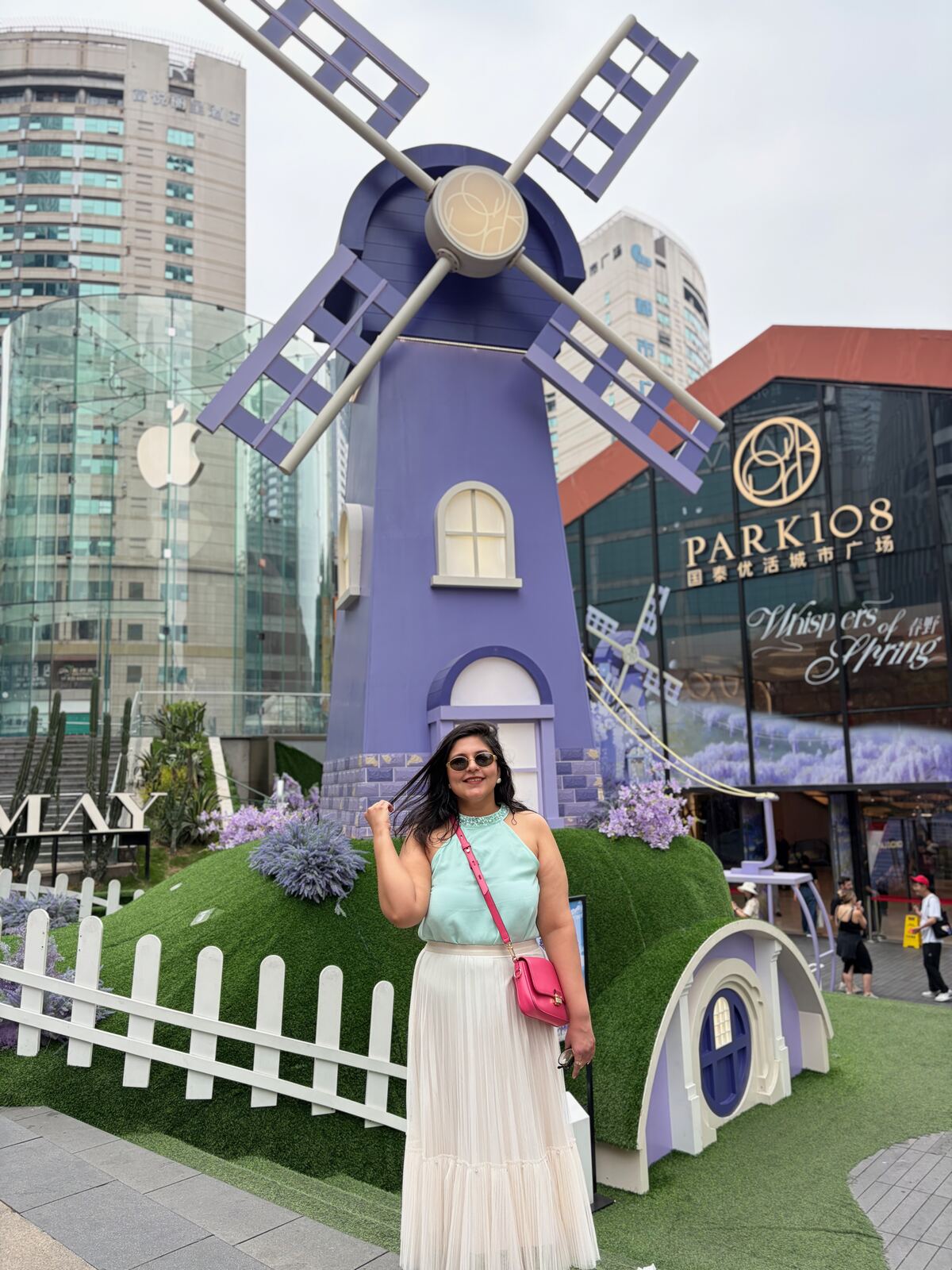
HARMAY: The Miniature Perfume Paradise
At PARK 108 (Guotai Youhuo City Plaza) in Jiefangbei we found HARMAY, a huge store full of miniature perfumes. At airports we are always forced to buy the 100 ml or 150 ml bottle. Here there were minis of everything, with excellent deals, so obviously we bought a bunch.
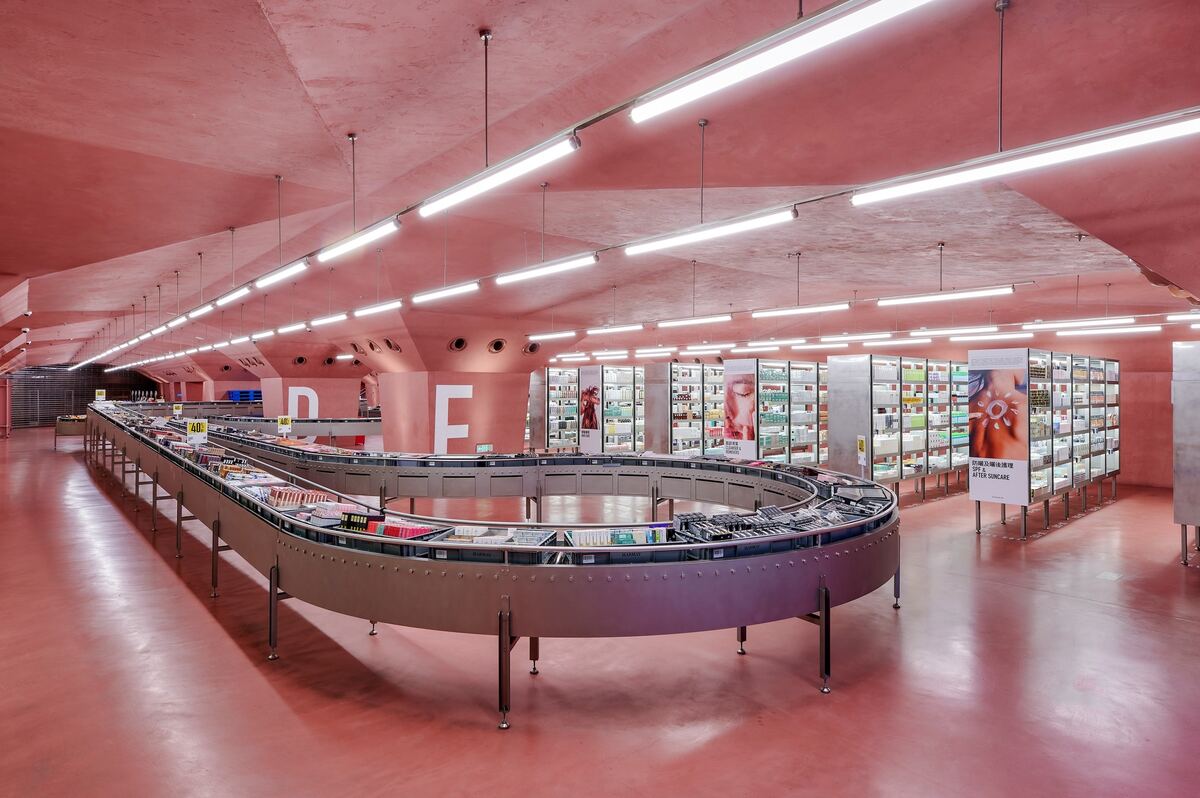
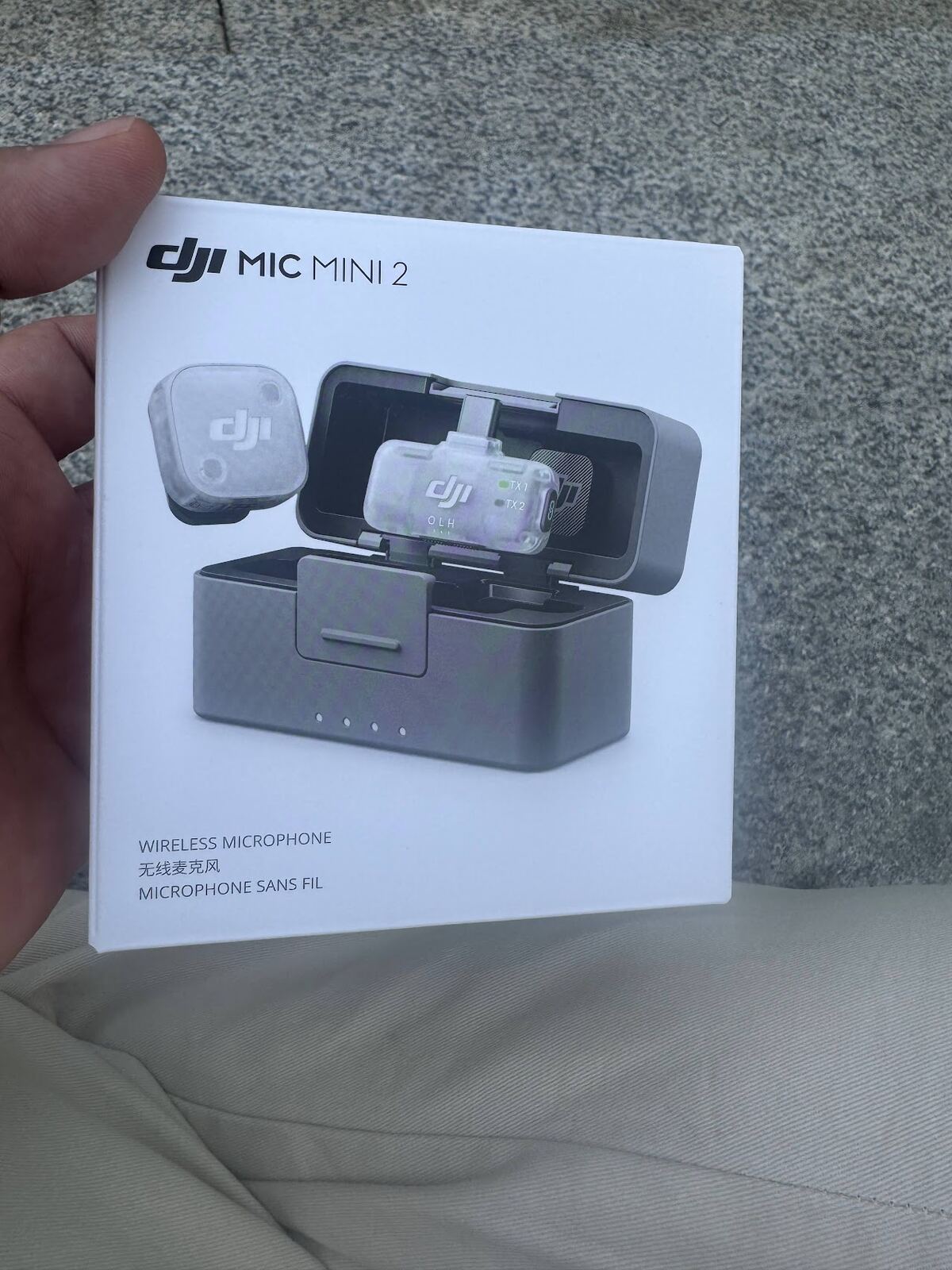
HARMAY wasn't the only damage PARK 108 did to our wallet. Elsewhere in the same mall we also picked up a DJI Mic Mini 2. We make so much content for Instagram that it was time to upgrade. 🎙️
Raffles City
In the evening we went to Raffles City, which is beautiful. It's the complex with the famous "skyscraper lying on its side": a 300-metre glass skybridge called the Crystal, sitting across the tops of four towers. It was designed by the same architect as Singapore's Marina Bay Sands, and you can see the family resemblance.
The weather was beautiful, so we spent a long time just sitting outside, watching the boats float past on the river. Inside is a huge shopping mall, so of course we wandered around and came out with a few cosmetics. Day three was very clearly the shopping day.
The Chopsticks Building
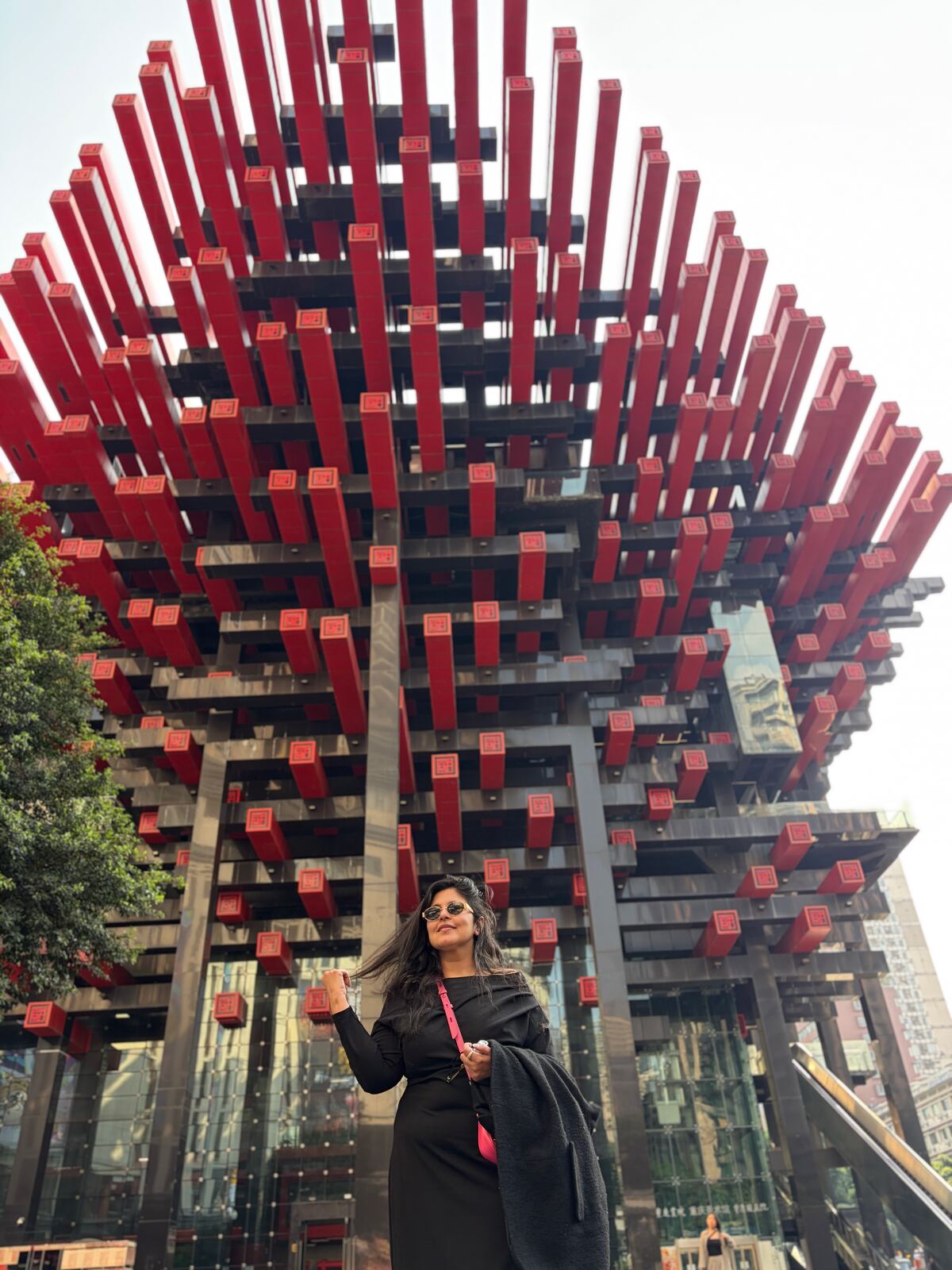
I almost forgot: on one of these days we also went to the Chopsticks Building, the red Guotai Arts Center right in Jiefangbei. It really does look like a giant bundle of red chopsticks. We were short on time, so we didn't go inside, but the outside alone is worth a stop for the photo ops.
Luckin Coffee: China's Own Starbucks
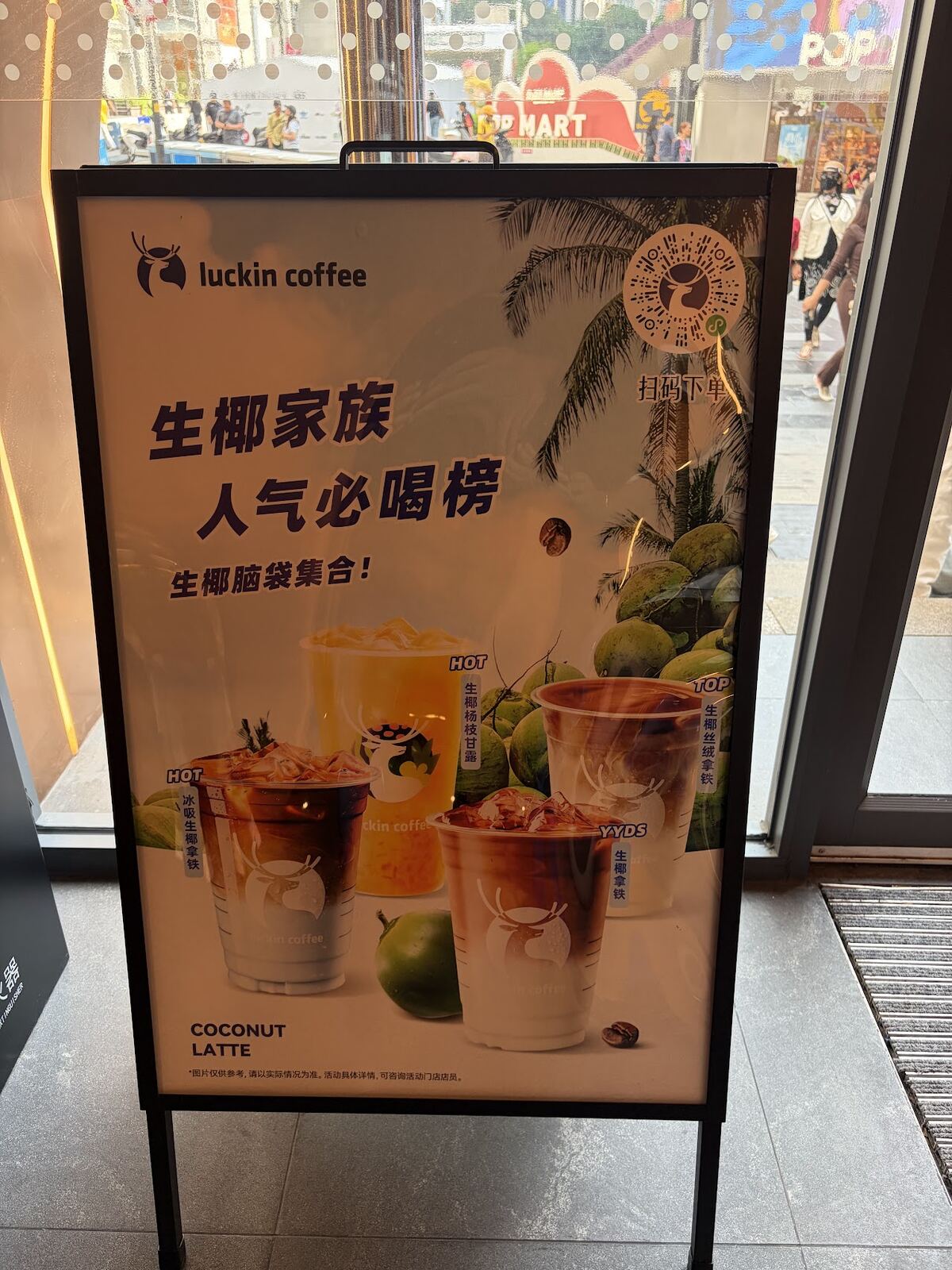
If there is one thing you will find on every corner in Chongqing, it's a Luckin Coffee. Think of it as China's own Starbucks, and we really enjoyed the coffees. Our theory on why it works: Luckin takes risks. It leans into Chinese customs and history, does boba teas, and keeps putting out new flavour mashups, while Starbucks plays it safe. The numbers back the risk-takers. Luckin was only founded in 2017, and by June 2023 it had 10,000 stores and overtook Starbucks as the biggest coffee chain in China. By mid-2026 it had more than 36,000 stores, almost all in China, against about 8,000 for Starbucks there.
Pro Tip: Let the Photographers Do the Work
At almost every tourist spot in China you will find photographers. Most charge about 20 yuan a picture, and you can bargain it down to 15, sometimes even 10. Bargaining: the one skill every Punjabi carries across borders. You don't even need to take your own pictures. Here is how it works:
- Most of them shoot on iPhones and AirDrop you the photos on the spot.
- Their artist then retouches the pictures and sends the final versions on WeChat in about 30 to 40 minutes.
- If you don't like something, reply on WeChat and ask them to change it. They will.
So make sure WeChat works on your phone before you go. Ours did, luckily. Here is our eSIM vs VPN guide for China to get that sorted.
Next Time, Chongqing
Every time we talk about this trip, we say the same thing: we should have gone to Chengdu too. Time was short. We missed the Chongqing 1949 show, we missed Chengdu, and there is so much more, like the Yangtze River Cableway. If you really want to soak Chongqing in, take it slow. And stay at the Westin. Highly recommended.
Chongqing, tussi kamaal ho. We are coming back.
| Location | Chongqing, China |
| Travelled | May 12 to 15, 2026, family of three |
| Flight | Shanghai Hongqiao to Chongqing Jiangbei, China Eastern, about 2h 45m |
| Flight Cost | About ₹24,798 for three, economy (book on Trip.com) |
| Stay | The Westin Chongqing Liberation Square, Executive Deluxe King, 3 nights, ₹61,721 |
| Hotpot | Underground City Old Hotpot, Longtousi branch, Yubei District |
| DiDi to Hotpot | 11.90 yuan there, 18.40 yuan back |
| Photographers | About 20 yuan a picture, bargain to 10 to 15 |
| Missed | Chongqing 1949 show, Chengdu, Yangtze River Cableway |