Imagine landing in China for your dream holiday.
Midway through the trip, at a domestic security checkpoint, an officer pulls your ₹7,000 Anker power bank out of the X-ray bin, turns it over, and points you toward a disposal bin.
It isn't fake. It isn't damaged. It isn't oversized.
It's simply missing three letters almost nobody outside China has heard of: CCC.
That's exactly what happened to us. We'd already sorted our China visa, set up our eSIM, and packed one power bank for the entire trip: an Anker, Qi2 magnetic, bought in the US for ₹6,986. At domestic security within China, ours got pulled aside, turned over, and rejected, not because it was a fake or oversized, but because it simply wasn't built for the Chinese market.
If you're flying anywhere within China with a power bank bought outside the mainland (Anker, Belkin, Stuffcool, Portronics, however premium), there's a real chance this happens to you too. Here's exactly why, what to buy once you land instead, and the cheap workaround that saved ours from the bin.
⚠️ Don't Buy a New Power Bank Before Checking for This Logo
Even an expensive, genuine Anker or Ugreen bought outside mainland China can be confiscated at Chinese airport security. Officially this is a domestic-flight rule, but travelers have also reported it happening on direct international departures from major hubs. The one thing security is checking for is a permanently molded or laser-etched CCC (China Compulsory Certification, also called "3C") mark on the power bank's casing. Since 28 June 2025, this has been strictly enforced: no mark means no mercy, regardless of price or brand. Stickers don't count either; it has to be built into the shell.
Check Your Power Bank in 10 Seconds
Before you leave home, flip your power bank over and look at the small certification marks near the barcode or rating label:
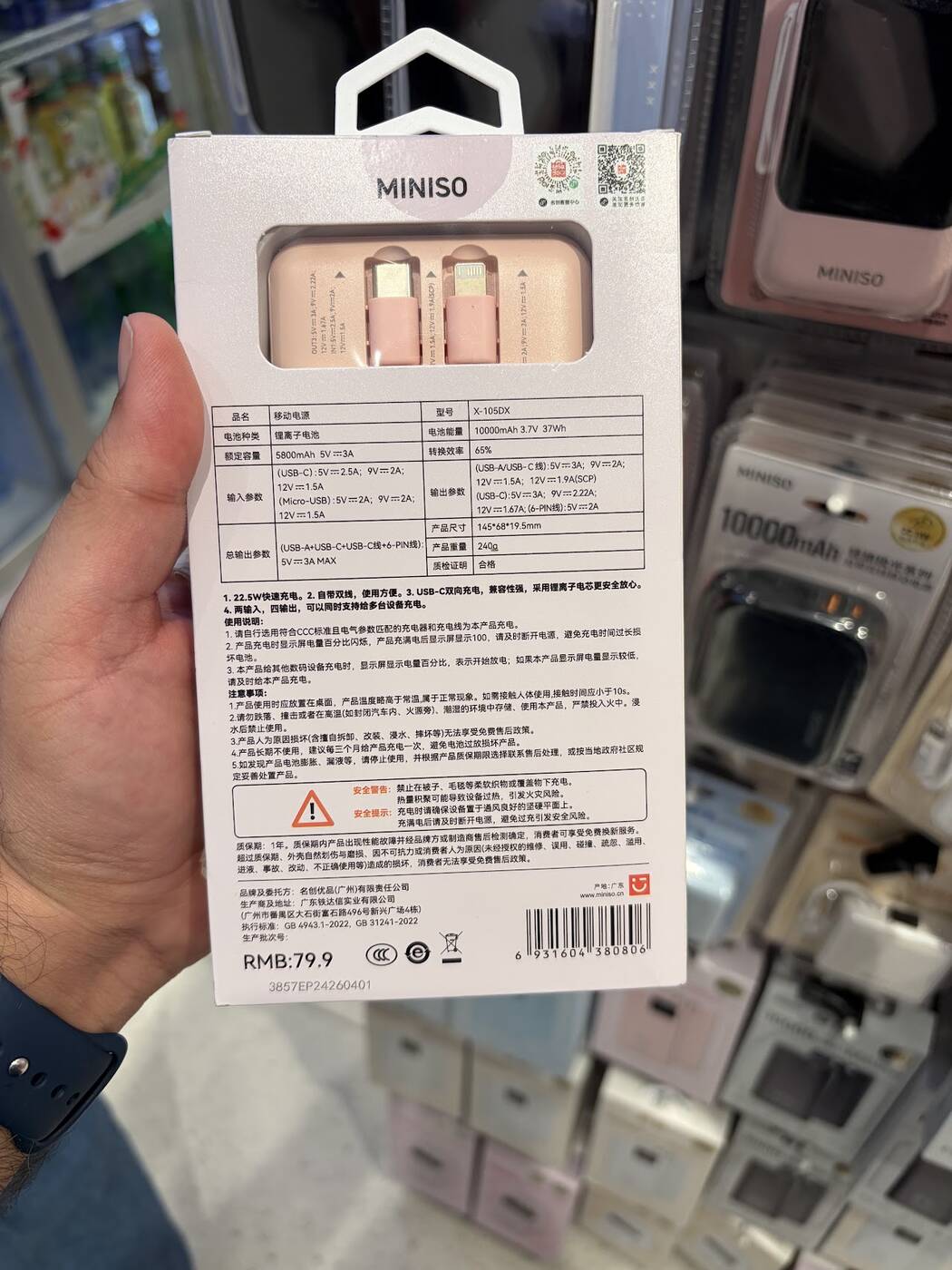
- ✅ CCC / 3C mark: three interlocking "C" shapes inside an oval, like the one on the Miniso pack further down this post. This is the only one that counts for China.
- ❌ CE mark: two rounded, overlapping letters, used across Europe. Looks similarly official, doesn't count in China.
- ❌ BIS mark: a hexagon with "BIS" printed inside, used in India. Also doesn't count.
- ❌ FCC mark: a stylised "FC" logo, used in the US. Also doesn't count.
- ❌ No mark at all: if you can't find any certification stamp, assume the worst and don't risk carrying it on a domestic Chinese flight.
We don't have close-up photos of the CE, BIS, or FCC marks to compare side by side here, but the shape difference is unmistakable once you know what to look for: CCC is the only one with three stacked "C"s.
Why Your Perfectly Good Power Bank Gets Flagged
The Civil Aviation Administration of China (CAAC) runs some of the strictest lithium-ion battery rules anywhere. International travelers are used to the watt-hour limit: under 100Wh is fine, 100 to 160Wh needs airline approval in advance, anything over 160Wh isn't flying at all. China has that rule too. But on top of it, domestic flight security also checks for China's own compulsory safety certification, the CCC mark.
This is an airline and airport security rule, not a China-wide law. China's state railway operator, 12306, has confirmed on its own official channels that high-speed and regular trains do not check power banks for CCC certification or brand. We carried our rejected Anker on the high-speed train from Shenzhen to Guangzhou afterward and it was never even glanced at. If your trip is train-heavy rather than flight-heavy, this whole problem may simply never come up.
Here's the trap: your power bank might genuinely say "Made in China" on the back. It doesn't matter. If you bought it in India, the US, or Europe, it was built for that export market: it'll carry BIS (India), FCC (US), or CE (Europe) marks, not the domestic CCC oval. Ours was a legitimate, recent Anker, and it still got rejected, because it simply wasn't manufactured for the Chinese domestic market.
A tech journalist covering this for Mashable had almost the identical experience at Haikou Meilan Airport: a premium Belkin power bank confiscated on a layover, for the exact same reason. It's common enough that it's worth planning around rather than hoping you'll get lucky.
Quick Reference: Is Your Power Bank at Risk?
| Where You Bought It | Has CCC Mark? | Risk at Chinese Security |
|---|---|---|
| Anker, Ugreen, Baseus, Xiaomi (bought at a mainland China store) | Yes | Low: this is exactly what it's certified for |
| Anker, Ugreen, Belkin, Stuffcool, Portronics (bought in India, the US, or Europe) | No | High: flagged regardless of price or brand reputation |
| Apple or third-party MagSafe battery packs (bought outside mainland China) | No | High: same export-certification issue |
| Certification depends on where the specific unit was manufactured and sold, not the brand name. The same brand can be compliant or non-compliant depending on which market's version you're carrying. | ||
💡 The March 2026 Update
Since 1 March 2026, power banks newly receiving CCC certification must also carry a scannable traceability QR code right next to the CCC mark, so security can verify the certificate on the spot. This only applies to freshly certified units for now; the full requirement for every CCC power bank to carry it kicks in March 2027. So don't be alarmed if a power bank you buy in China today has the CCC mark but no QR code yet, that's still normal until the transition completes.
Where to Buy a Compliant Power Bank Once You Land
The simplest fix is to not carry your expensive one at all. Buy a certified replacement as soon as you touch down, and use it for the rest of the trip.
1. Miniso: Cheap and Everywhere
Miniso stores are in pretty much every mall, metro entrance, and transit hub across China, and everything on their shelves is made for the domestic market, CCC mark included, no exceptions. We picked one up for ¥79.9 (roughly ₹950): a 10000mAh, dual-input, USB-C/Lightning power bank. It's not going to out-charge your premium Anker, but it's cheap insurance for the rest of your domestic legs.
2. Xiaomi, Anker, or Ugreen Brand Stores
If you want something with real charging speed, walk into an official Xiaomi, Anker, or Ugreen store in China and ask for their domestic (mainland) model: these are manufactured and certified for the Chinese market, so they carry the CCC mark as standard. Yes, that includes Anker and Ugreen: the ones sold inside China are compliant, it's the export versions sold in India, the US, and Europe that aren't.
We ended up buying a Ugreen power bank at Huaqiangbei in Shenzhen, the massive electronics market there, for roughly a third of what the same model costs in India. Fully CCC-certified, no jurisdiction issues, and genuinely cheaper than buying it at home.
The Lifeline: How to Mail Your Charger Forward at the Airport
If you ignore all this advice and find yourself stuck at a security gate with a rejected charger, don't throw it in the disposal bin. Major airports across mainland China host on-site courier services designed specifically to handle non-compliant travel gear. If an officer flags your power bank, politely ask for directions to the terminal's express courier desk before you clear the final gate.
On our transit through Shanghai Hongqiao International Airport (SHA) Terminal 2, we ran into this exact roadblock. The airport staff directed us to the integrated SF Express (顺丰速运) desk right inside the terminal.
- Get directed to the courier desk Security staff at Chinese airports deal with this constantly. Ask them, and they'll point you straight to the terminal's SF Express counter.
- Address it to your next hotel, not yourself You don't need a residential address. Give the front desk name and address of wherever you're staying next; we shipped ours from Shanghai Hongqiao straight to our hotel in Shenzhen.
- Pay the small fee and go Standard courier (标快) cost us ¥19, about ₹270, for a securely bubble-wrapped parcel.
- Collect it at check-in By the time we checked into our next hotel, the package was already waiting at the front desk.
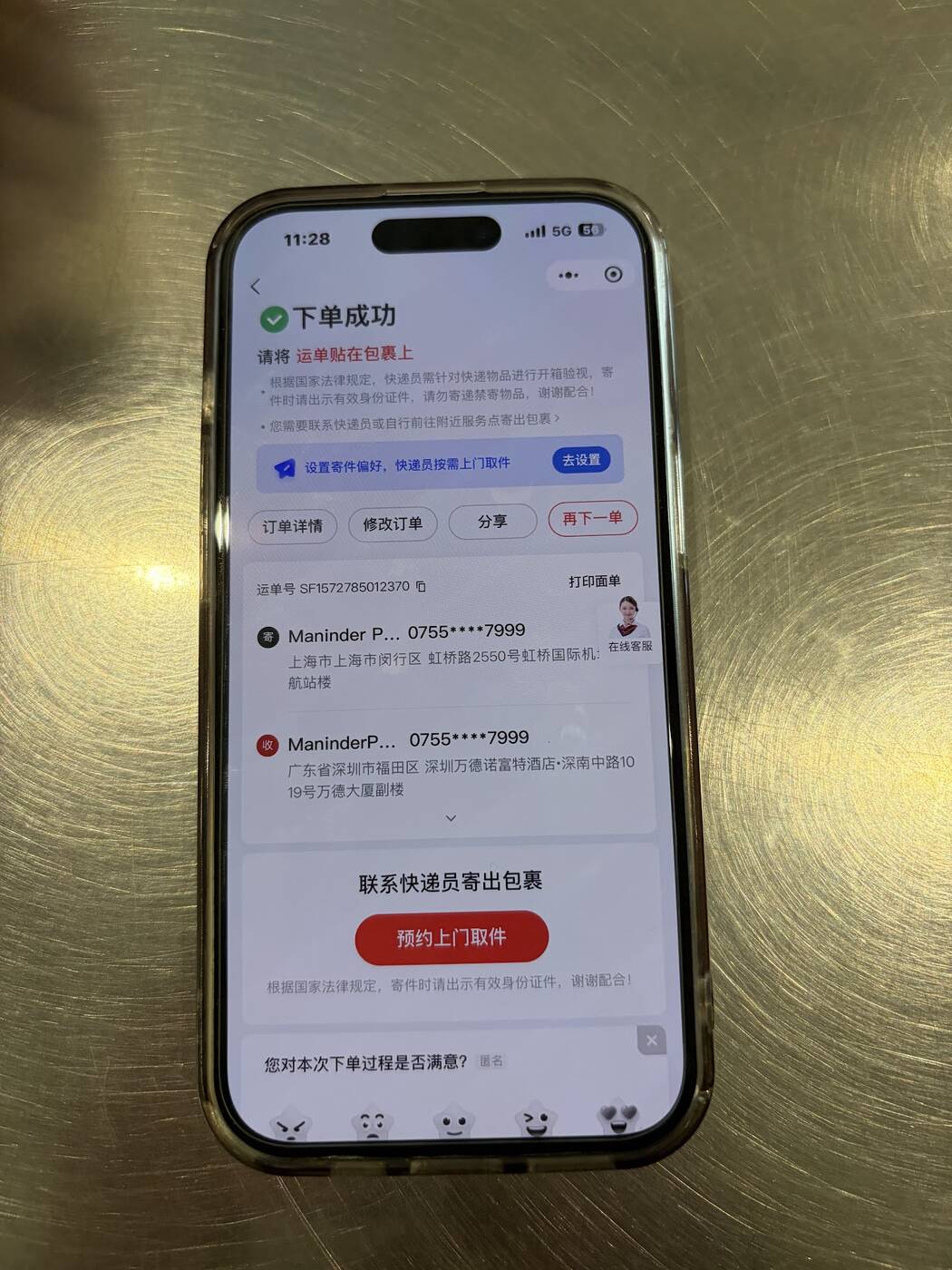
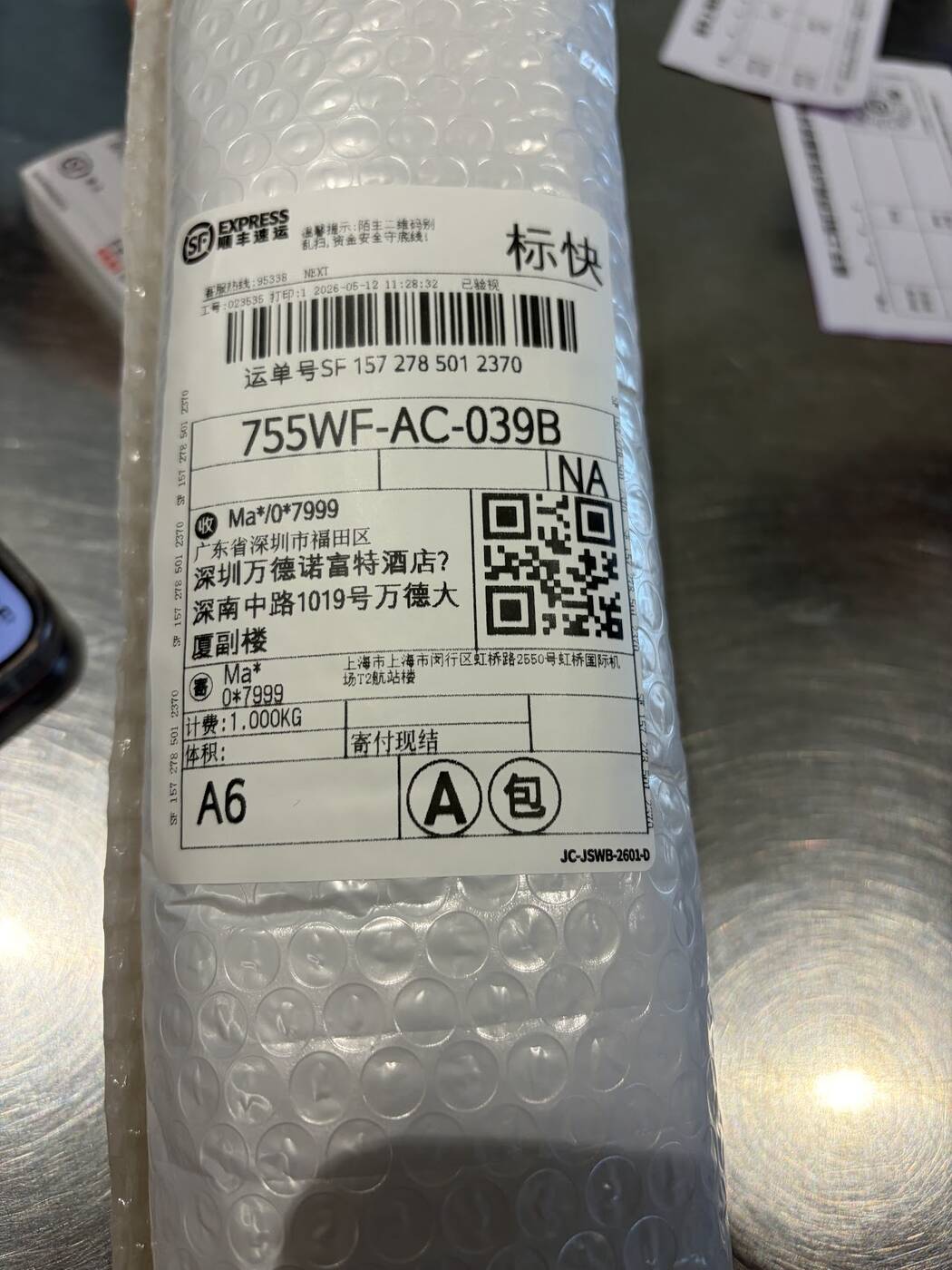
The staff at the counter were genuinely lovely about it: no lecture, no fuss, just a quick, well-practiced process that told us this happens to travelers all the time.
✈️ The Honest Takeaway
Losing an expensive power bank at security stings, but it's completely avoidable once you know the rule. And even if you get caught out, it's not game over. Buy local for a few hundred rupees, or mail your existing one ahead for the cost of a coffee. Either way, don't let this be the thing that ruins your China trip.